Engineered GCCM Lining Systems
ADVANCED CIVIL INFRASTRUCTURE SYSTEMS
Rapid-deployment cementitious lining solutions for drainage, erosion protection, hydraulic infrastructure and selected rehabilitation works.
MK Civil assists clients in assessing applications, technical requirements, installation conditions and preliminary quantities to determine whether a Geosynthetic Cementitious Composite Mat system is appropriate for the project.
A Modern Cementitious Lining Technology
WHAT IS GCCM?
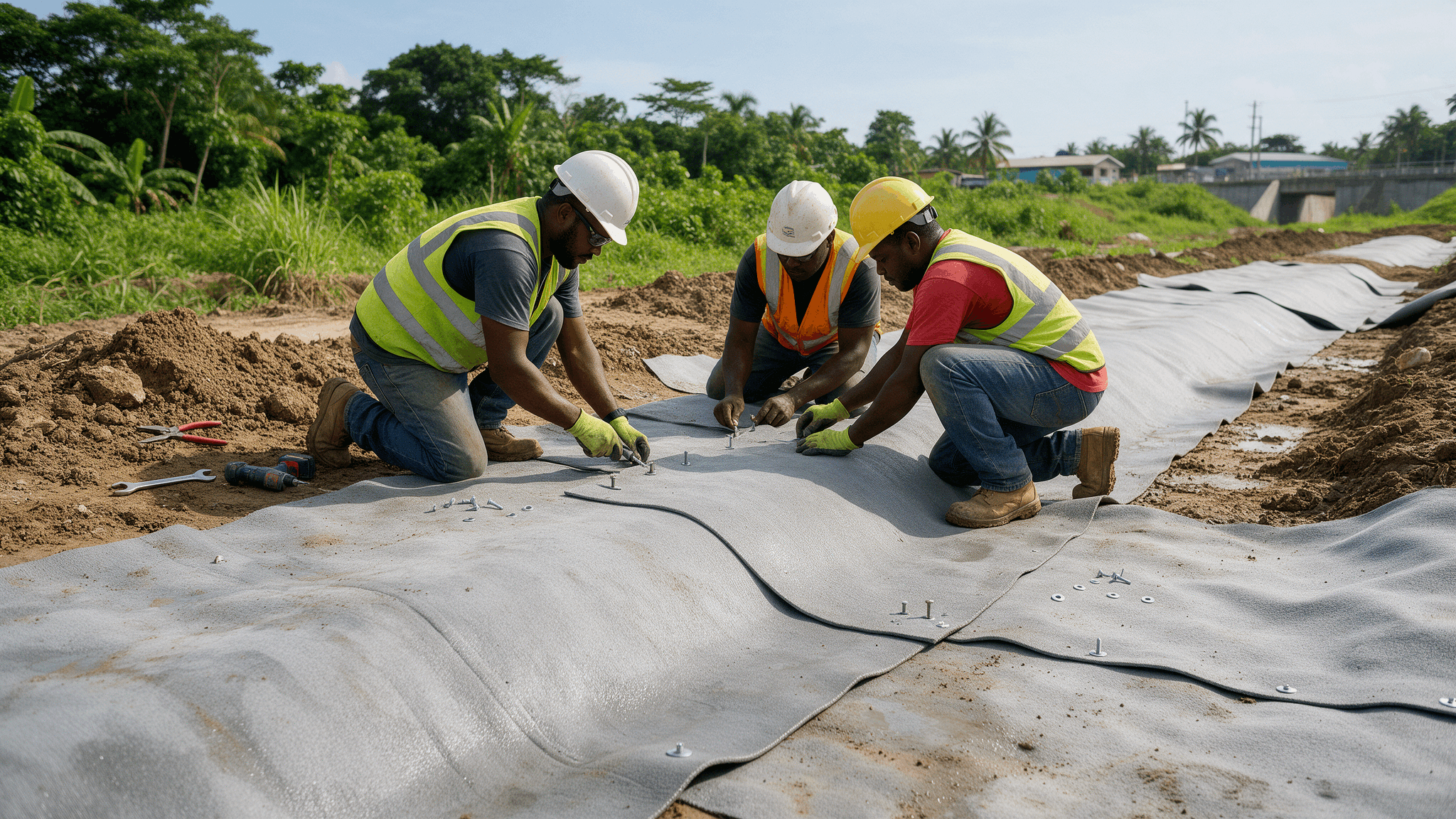
Geosynthetic Cementitious Composite Mats, or GCCMs, combine geosynthetic materials with a factory-controlled cementitious layer supplied in a flexible form.
The material is deployed over a prepared surface, secured, jointed and hydrated. Once cured, it forms a hardened cementitious lining suitable for selected drainage, erosion-control and infrastructure-protection applications.
For appropriate projects, GCCM can reduce reliance on wet-concrete placement, extensive formwork and heavy site logistics while providing a durable engineered surface.
A Practical Alternative for Suitable Civil Works
WHY GCCM?
GCCM is particularly useful where conventional concrete construction may be complicated by access, terrain, logistics, programme or existing infrastructure.
Key Advantages
- Rapid deployment
- Reduced wet-concrete handling
- Less formwork for suitable applications
- Reduced reliance on ready-mix access
- Suitable for difficult-access and remote works
- Conforms to irregular surfaces
- Reduced site disruption
- Durable cementitious surface protection
- Efficient rehabilitation of selected existing infrastructure
- Potential programme and logistical savings
Engineering note: GCCM is not intended to replace conventional reinforced concrete in every application. System selection should be based on the actual engineering requirements of the project.
Designed for a Wide Range of Infrastructure Uses
APPLICATIONS
Drainage & Water Management
- Drain and channel lining
- Roadside drainage
- Stormwater infrastructure
- Swales
- Outfalls
- Spillways
- Irrigation channels
- Water conveyance
Erosion Protection
- Slope surface protection
- Embankment erosion control
- Berm protection
- Scour protection
- Selected coastal and infrastructure erosion applications
Rehabilitation
- Existing concrete drain rehabilitation
- Culvert remediation
- Deteriorated channel lining
- Selected surface rehabilitation
Industrial & Remote Works
- Industrial drainage
- Oil & gas infrastructure
- Utilities
- Quarry and mining drainage
- Agriculture
- Difficult-access civil works
Important: GCCM can provide surface erosion protection but should not be represented as independently providing structural slope stabilisation.
FASTER · COST EFFECTIVE · ACCESSIBLE
Selecting the Right Construction Approach
GCCM VS CONVENTIONAL METHODS
Compared with conventional poured concrete or shotcrete, GCCM can provide advantages for suitable lining and erosion-control applications by reducing:
- ready-mix logistics;
- formwork;
- wet-concrete handling;
- heavy-equipment requirements;
- construction activity at difficult-access locations.
Its flexible pre-hydration form can also make it useful for irregular surfaces and selected rehabilitation works.
Conventional reinforced concrete remains the appropriate solution where significant structural capacity, load-bearing performance or substantial concrete sections are required.
Simple, Controlled Installation
HOW THE SYSTEM WORKS
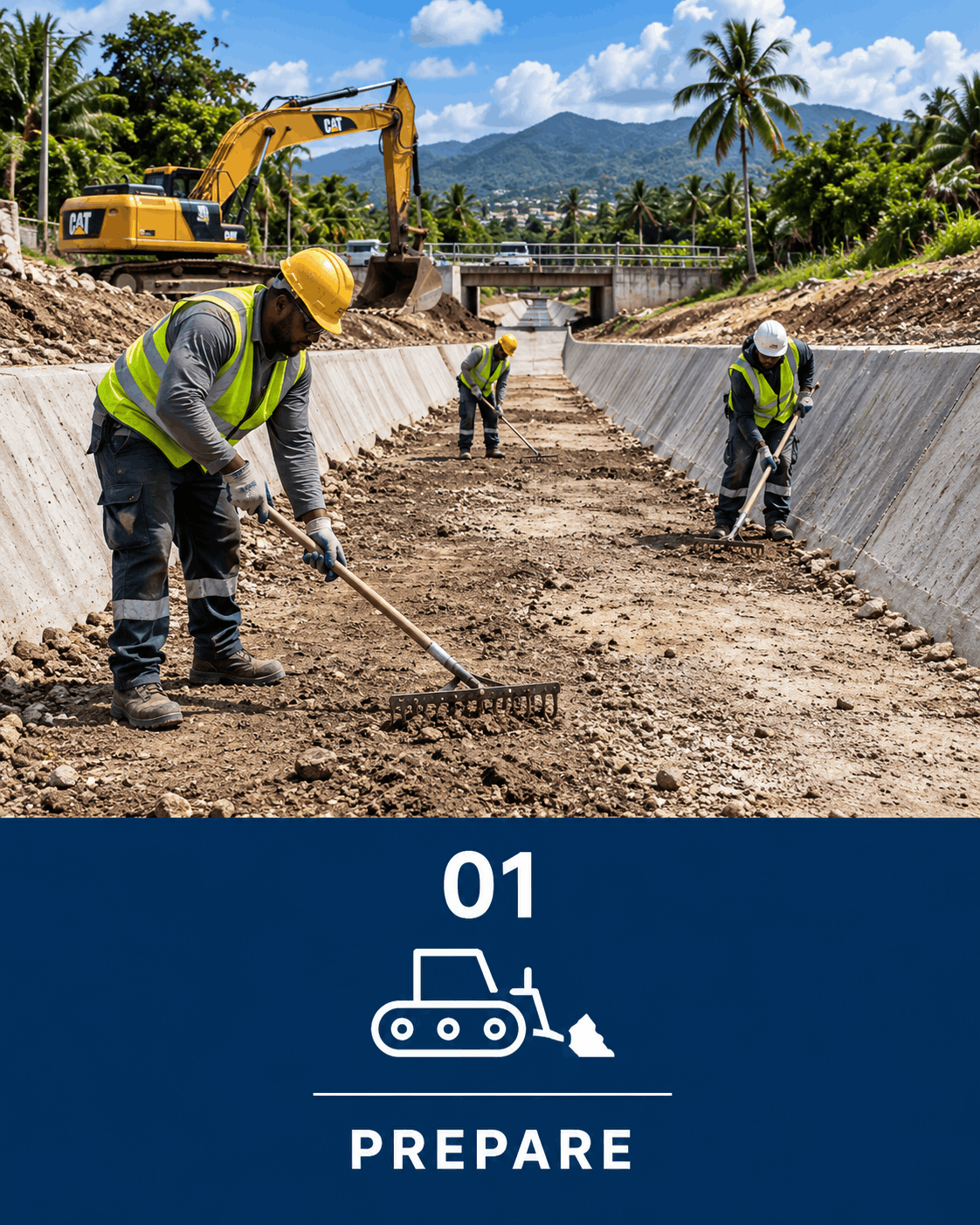
Inspect and prepare the substrate to suit the application.
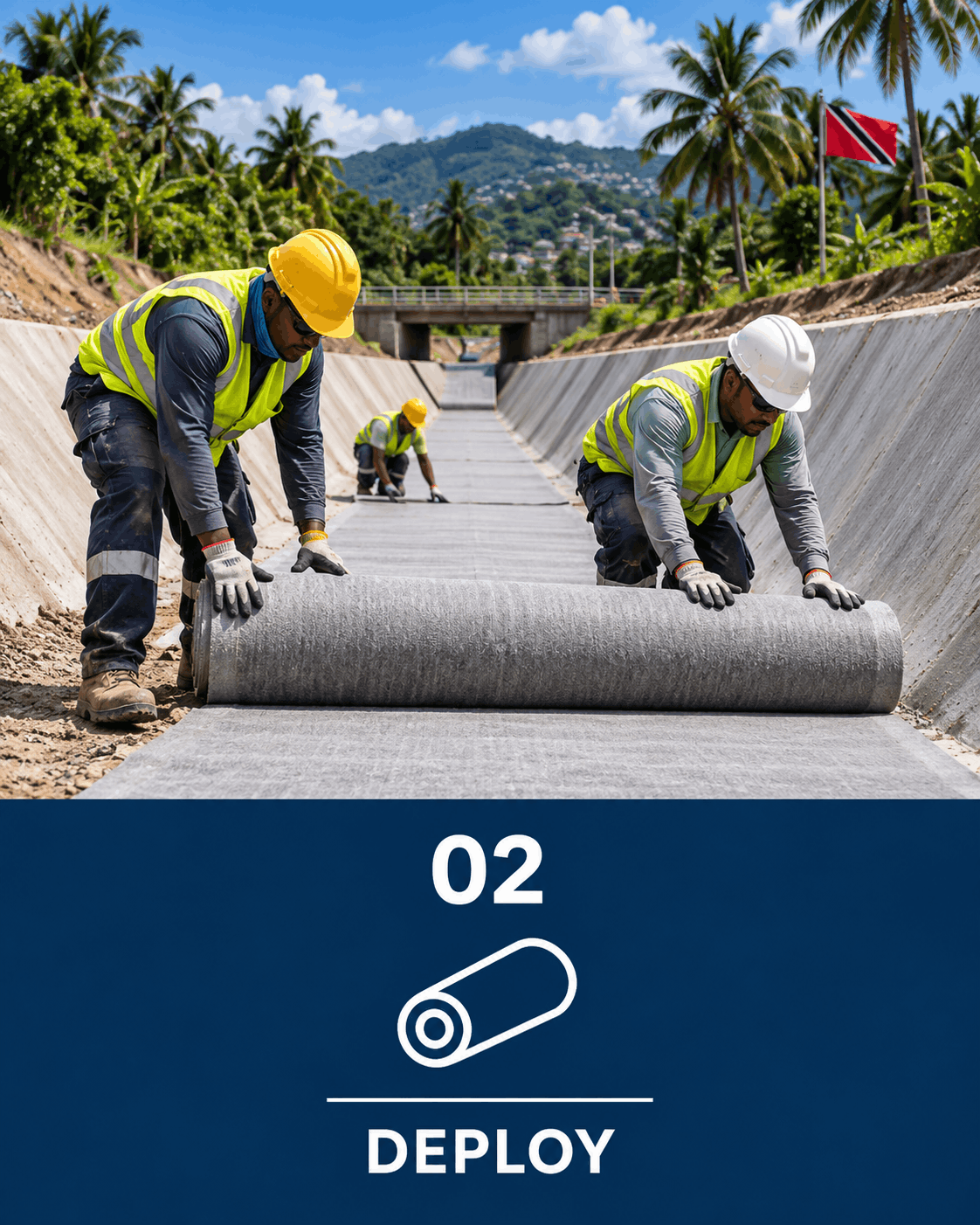
Position and cut the flexible GCCM material to the required layout.
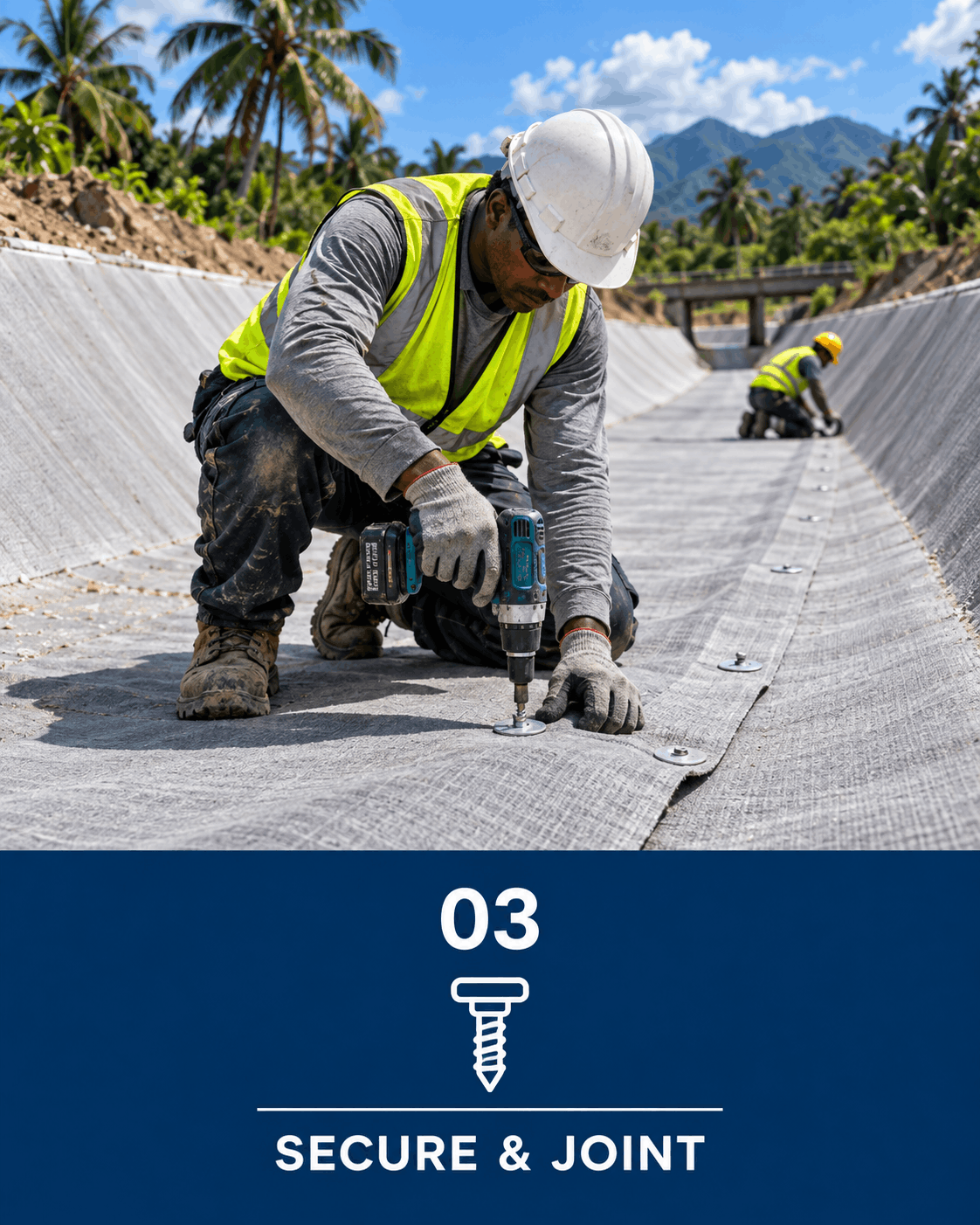
Anchor, overlap and terminate the material according to the project methodology.
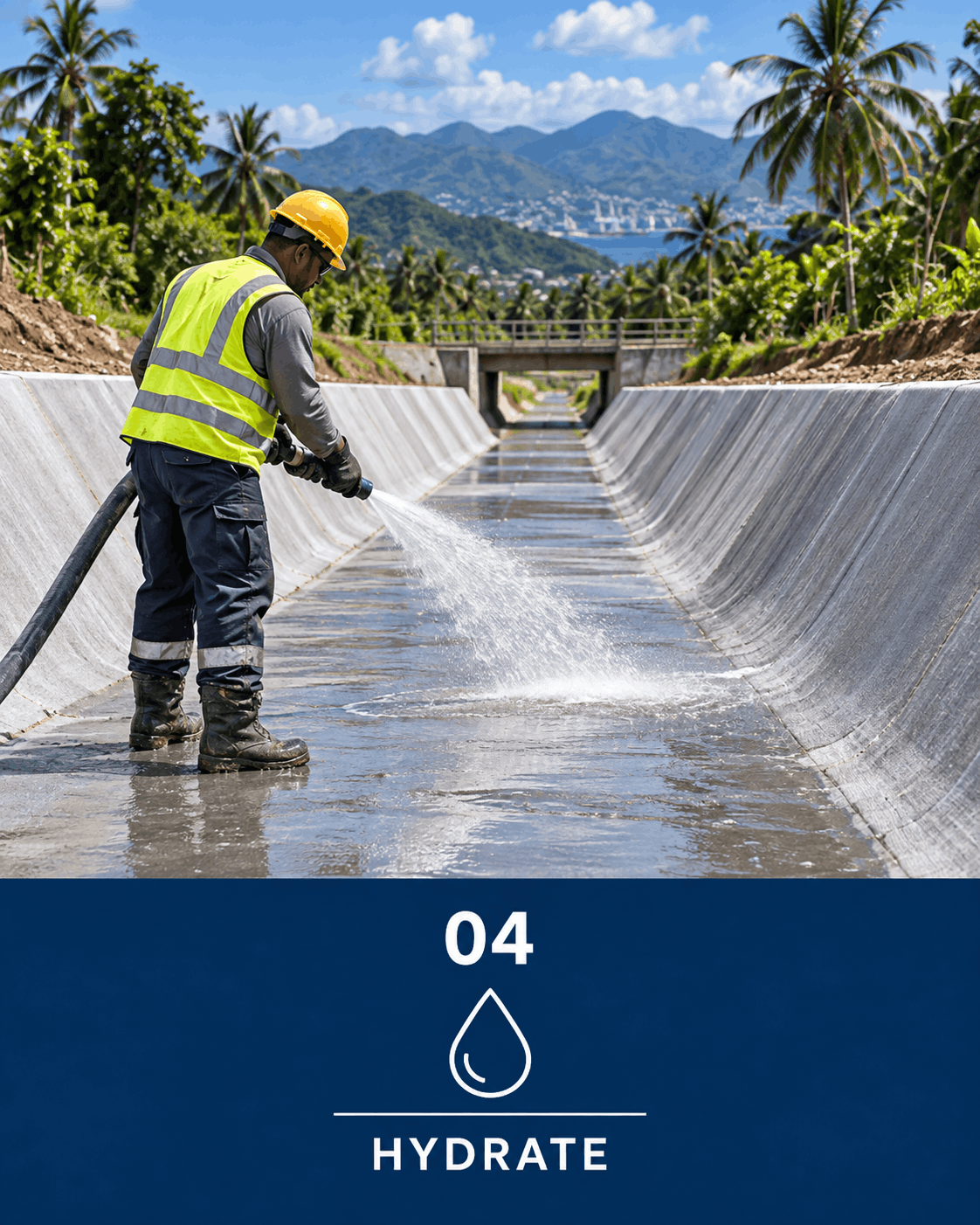
Apply water in accordance with the selected system requirements.
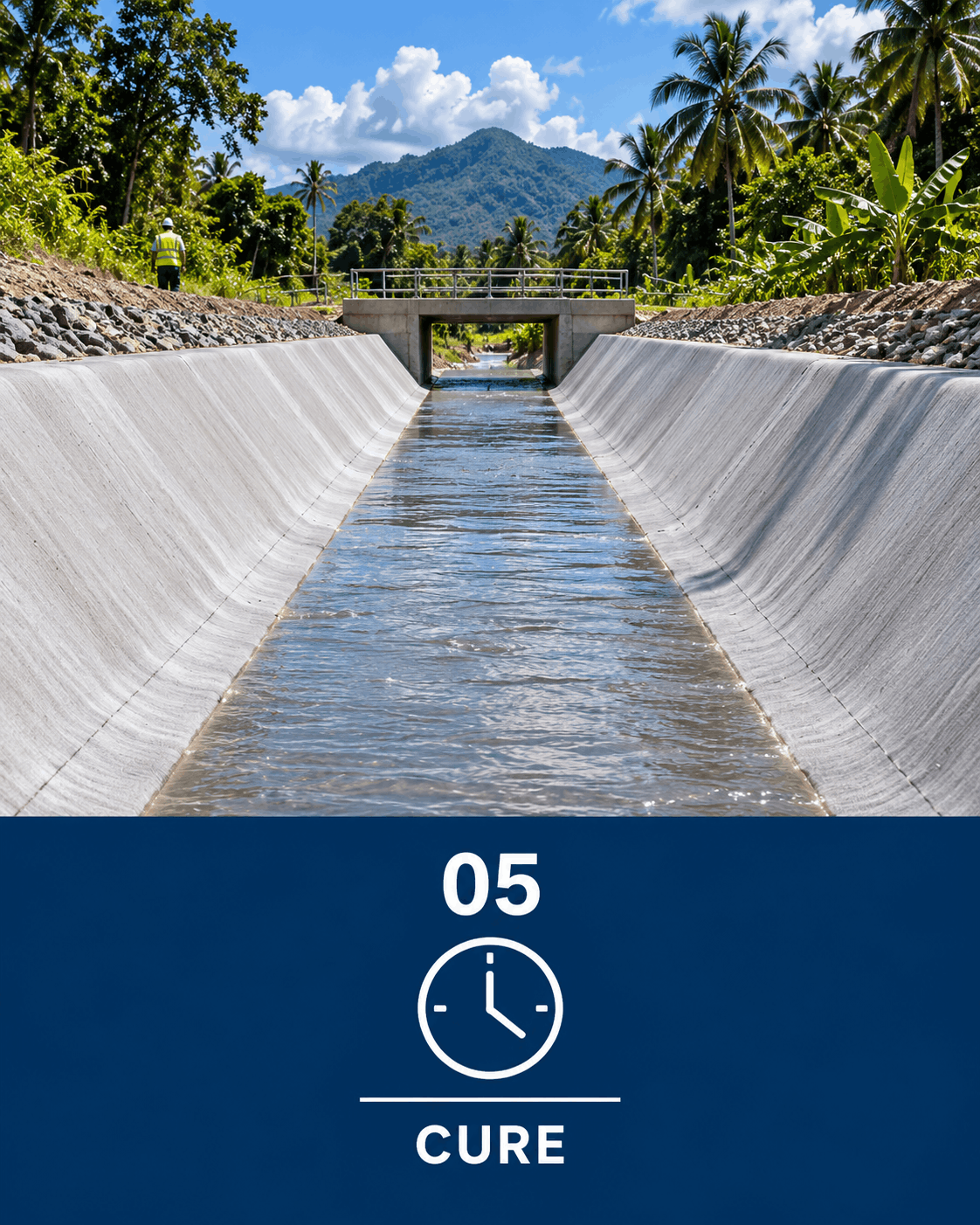
Allow the material to cure before final inspection and service.
Every Application Should Be Assessed Individually
PROJECT SUITABILITY
Final suitability can depend on:
- substrate condition;
- hydraulic conditions;
- flow velocity;
- scour and erosion mechanism;
- slope geometry;
- geotechnical stability;
- anchoring and jointing;
- industrial or chemical exposure;
- site access; and
- project specifications.
Where structural slope instability exists, an appropriate geotechnical stabilisation system must be designed separately.
GCCM systems should be selected according to project requirements and applicable GCCM performance classifications, with product-specific technical data confirmed during the technical submittal process.
INDUSTRIES
Supporting Infrastructure Across Multiple Sectors
- Roads & Highways
- Drainage & Stormwater
- Water & Wastewater
- Oil & Gas
- Petrochemical & Industrial
- Utilities
- Mining & Quarrying
- Agriculture & Irrigation
- Ports & Marine Infrastructure
- Commercial & Residential
- Development
- Government Infrastructure
Frequently Asked Questions
What is GCCM?
A factory-manufactured geosynthetic and cementitious composite supplied in flexible form and hydrated after installation to create a hardened lining.
Can GCCM replace concrete?
It can provide an alternative for selected lining, drainage, erosion-control and rehabilitation applications, but it is not a universal replacement for structural reinforced concrete.
Can it be installed over existing concrete?
Potentially, where the remaining substrate or structure is suitable and any required repairs are completed first.
Can GCCM stabilise a failing slope?
Not independently. GCCM can protect a stable slope surface from erosion but does not replace structural or geotechnical stabilisation measures.
Can MK Civil assist with specifications and quantities?
Yes. MK Civil can assist with application review, preliminary quantities, technical documentation, specification support, installation methodology and quotation preparation.
What regions will this be available to?
At present, Trinidad and other Caribbean and Latin American countries.
Enquiry Form
GCCM Project Assessment & Information Request
Have a Drainage, Erosion or Rehabilitation Challenge?
Start a Project Discussion.
Send us your project drawings, photographs, dimensions or available site information.
MK Civil can help assess:
System Suitability · Technical Requirements · Quantities · Specification · Installation Approach · Pricing